


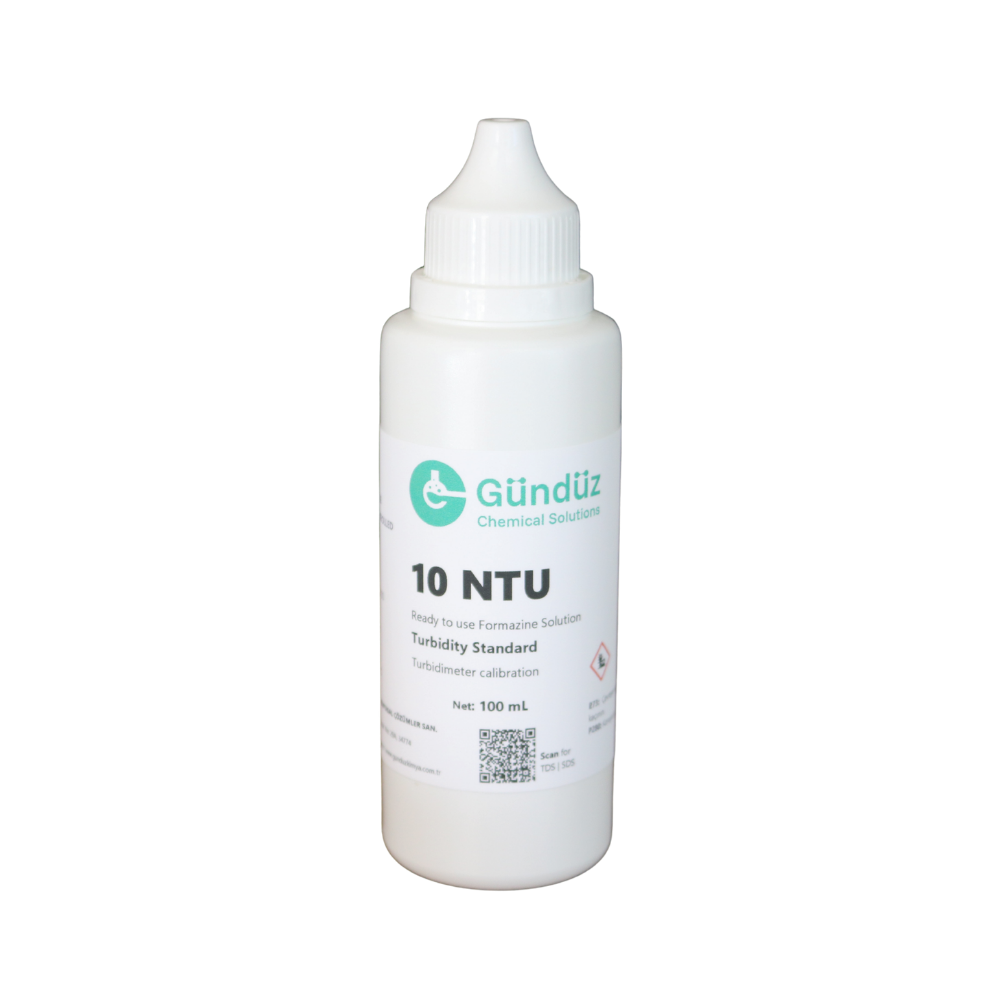


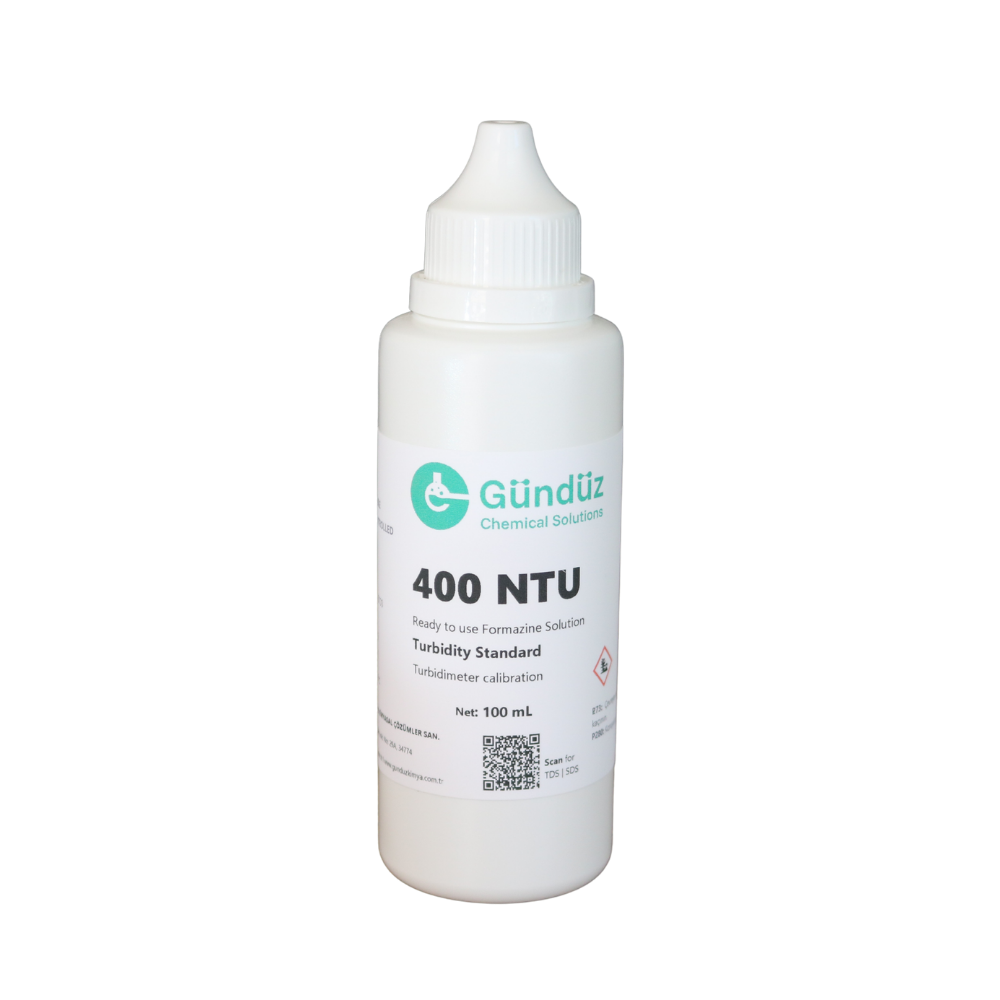


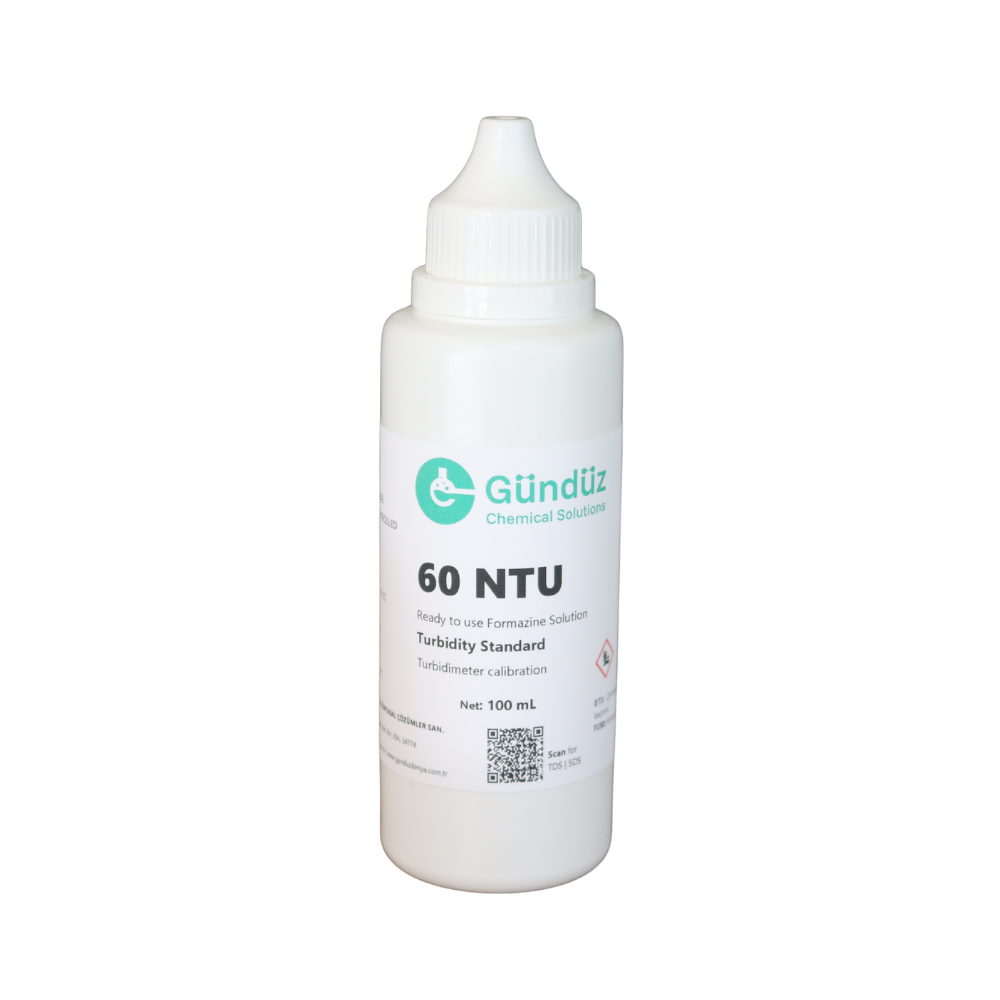


Turbidity 0.5 NTU Calibration Standard – Formazin
When it comes to ultra-sensitive water quality testing and strict environmental compliance, precision is not just an option—it is a mandatory requirement. The Turbidity 0.5 NTU Calibration Standard – Formazin is an essential solution designed to ensure your turbidimeters and nephelometers are functioning at absolute peak accuracy when analyzing ultra-low-range, near-clear samples. Whether you are verifying treated drinking water against strict regulatory limits, monitoring pharmaceutical-grade ultra-pure water (UPW), or checking the exact efficiency of reverse osmosis membranes, our ready-to-use Formazin standard provides the exact reliability and traceability you need for flawless low-end calibrations.
What is a Formazin Turbidity Standard?
Formazin is the only globally recognized and universally accepted primary standard for turbidity calibration. Created by mixing hydrazine sulfate and hexamethylenetetramine, Formazin produces a suspension of particles that uniformly scatter light.
Because of its consistent particle size and unparalleled stability, environmental protection agencies worldwide—including the EPA (Method 180.1) and ISO (Method 7027)—mandate or highly recommend Formazin for calibrating turbidity meters.
Why is the Turbidity 0.5 NTU Calibration Point Important?
Turbidity is measured in Nephelometric Turbidity Units (NTU). A 0.5 NTU standard falls directly into the highly sensitive ultra-low-range category of turbidity measurement. Notably, 0.5 NTU is frequently cited by global health and environmental organizations (such as the EPA) as a strict performance threshold for membrane filtration and treated municipal drinking water. Calibrating or verifying your instruments at 0.5 NTU ensures precise readings for liquids that demand absolute purity, such as:
-
Drinking Water Compliance: Verifying that treated municipal water from fine filtration systems remains safely below the 0.5 NTU or 1.0 NTU maximum regulatory thresholds before public distribution.
-
Ultra-Pure Water (UPW) Systems: Monitoring water quality for pharmaceutical manufacturing, laboratory testing, and semiconductor production, where even microscopic contamination is catastrophic.
-
Membrane & Final Filtration: Assessing the immediate efficiency and integrity of Reverse Osmosis (RO) membranes and ultra-filtration barriers to detect microscopic leaks.
-
Beverage & Food Production: Verifying the absolute visual clarity of commercial liquids, bottled waters, and clear spirits.
Using a pre-mixed, highly accurate Turbidity 0.5 NTU Calibration Standard – Formazin eliminates the extremely high risk of contamination and error associated with creating ultra-low-level serial dilutions manually in the laboratory.
Turbidity 0.5 NTU Key Features and Benefits
-
Exceptional Ultra-Low-Range Accuracy: Manufactured under strict laboratory conditions to guarantee an exact 0.5 NTU value, ensuring your turbidimeter reads near-clear, highly filtered samples correctly every time.
-
Ready-to-Use Convenience: No complex mixing or dilution required. Simply invert gently and pour into your sample vial. Perfect for fast, accurate field and lab verifications.
-
High Stability & Shelf Life: Formulated to resist rapid settling and degradation, providing a reliable shelf life when stored correctly.
-
Regulatory Compliance: Fully compliant with EPA, Standard Methods, and ISO requirements for drinking water and ultra-pure water examination.
-
NIST Traceability: Manufactured using high-purity reagents to ensure full traceability to international standards.
Turbidity 0.5 NTU Best Practices for Handling and Storage
To maximize the lifespan and accuracy of your Turbidity 0.5 NTU Calibration Standard – Formazin, follow these critical laboratory guidelines. Note: At extreme low ranges like 0.5 NTU, preventing micro-bubbles, dust, and fingerprints is absolutely critical for accurate readings. The slightest impurity will cause major errors.
-
Gentle Inversion: Never shake the bottle. Shaking introduces micro-bubbles that will artificially spike ultra-low turbidity readings. Gently invert the bottle 5–10 times before use.
-
Proper Storage: Store the solution at room temperature (typically between 15°C and 25°C). Do not freeze, as freezing will permanently alter the particle size and ruin the standard. Keep away from direct sunlight.
-
Flawless Vials: Always use optically flawless, scratch-free sample vials. Wipe the outside of the cuvette with a lint-free cloth and silicone oil (if recommended by your meter’s manufacturer) before inserting it into the turbidimeter. A single fingerprint or speck of dust will cause significant measurement errors at 0.5 NTU.
-
Avoid Contamination: Never pour used standard back into the original stock bottle. Always pre-rinse your sample vial with a small amount of the 0.5 NTU standard before filling it completely to avoid dilution from leftover distilled water.
Frequently Asked Questions
What does NTU stand for?
NTU stands for Nephelometric Turbidity Unit. It is the standard unit of measurement used to quantify the cloudiness or haziness of a fluid caused by suspended particulate matter.
When should I use a 0.5 NTU standard?
A 0.5 NTU standard is utilized to calibrate or verify the extreme lower end of your turbidimeter’s curve. It is strictly necessary when testing samples that must be perfectly clear, such as treated drinking water, ultra-pure lab water, or when verifying filtration compliance against the 0.5 NTU or 0.3 NTU membrane performance limits.
Can I use Formazin in any brand of turbidimeter?
Yes. Because Formazin is the primary universal standard, the Turbidity 0.5 NTU Calibration Standard – Formazin is compatible with all major brands of turbidimeters, including Hach, Hanna Instruments, Thermo Fisher, and WTW.
Ensure Compliance and Accuracy Today Do not compromise on your ultra-low-range water quality analysis. Upgrade your laboratory and field calibration protocols with our highly stable, ready-to-use Turbidity 0.5 NTU Calibration Standard – Formazin. Optimize your instrument’s performance and guarantee the integrity of your analytical data.