


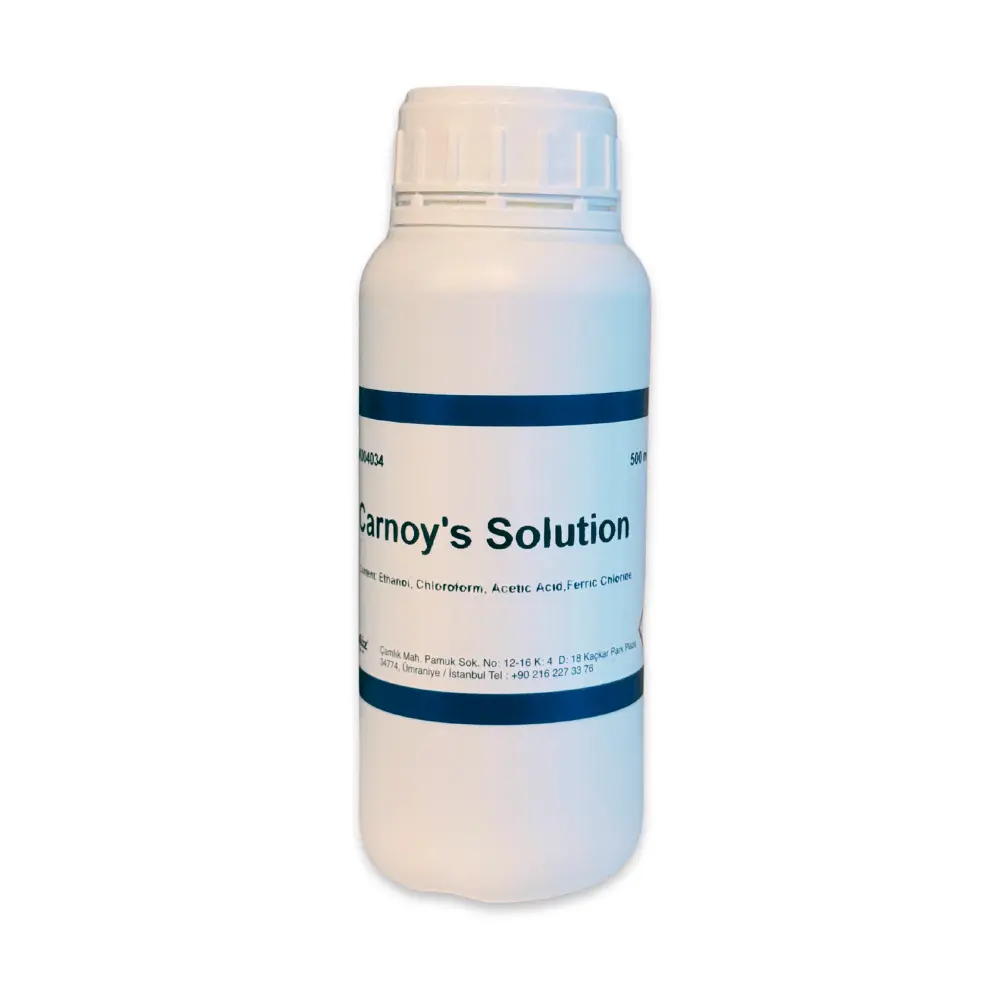
Carnoy’s Solution – Advanced Surgical Fixative for Maxillofacial Surgery
Formulated specifically for highly specialized oral and maxillofacial surgical procedures, the Carnoy’s Solution Odontogenic Keratocyst treatment is a powerful chemical cauterizing and fixative agent. It is used primarily as an adjunct therapy following the surgical enucleation of cysts and unicystic ameloblastomas. These cysts are known for their aggressive clinical behavior and exceptionally high recurrence rates due to microscopic epithelial satellite cysts (daughter cysts) left behind in the cancellous bone marrow spaces. Manufactured by Gündüz Kimya using ultra-high-purity medical and laboratory-grade raw materials, this specialized reagent deeply penetrates osseous walls to devitalize residual tumor cells without destroying the underlying bone framework. Packaged in leak-proof, light-resistant amber glass bottles to ensure long-term chemical stability, this fluid is engineered to deliver highly reliable and standardized results in surgical clinics and hospital environments.
The Chemical Mechanism of the Carnoy’s Solution Odontogenic Keratocyst Fixative
Understanding the underlying chemistry is crucial for safe and effective surgical application. The effectiveness of the Carnoy’s Solution Odontogenic Keratocyst fixative relies on the aggressive, synergistic properties of its active components: Absolute Ethanol, Chloroform, Glacial Acetic Acid, and Ferric Chloride.
-
Tissue Fixation and Penetration: The ethanol and chloroform act as powerful lipid solvents, rapidly destroying cell membranes and allowing the solution to penetrate up to 1.5 mm into the cancellous bone spaces where surgical curettes cannot reach.
-
Protein Coagulation: The glacial acetic acid aggressively denatures and coagulates cellular proteins, instantly devitalizing any remaining cystic epithelial lining and daughter cysts.
-
Hemostasis: The addition of Ferric Chloride (FeCl3) provides a critical local hemostatic effect, controlling bone bleeding and ensuring the chemical remains concentrated at the application site rather than being washed away by blood flow.
Maxillofacial and Dental Surgery Applications
Effective chemical cauterization is a standardized protocol for minimizing the recurrence of aggressive benign jaw tumors. Utilizing the Carnoy’s Solution Odontogenic Keratocyst formula is highly recommended for the following critical clinical applications:
-
Cyst Treatment: Applied to the bony cavity immediately following surgical enucleation and peripheral ostectomy to eradicate residual cystic epithelium.
-
Ameloblastoma Management: Utilized as an adjunct chemical cauterizing agent for unicystic ameloblastomas to lower the risk of aggressive recurrence.
-
General Bone Cauterization: Acts as a rapid fixative and hemostatic agent for other locally aggressive but non-malignant osseous pathologies in the maxillofacial region.
Safety, MSDS, and Critical Handling Guidelines
Because this formulation contains highly volatile and toxic chemicals, strict adherence to clinical safety protocols is absolutely mandatory. According to the Material Safety Data Sheet (MSDS) guidelines, the safety profile and physical properties are as follows:
-
Chemical Composition: Contains an optimized mixture of Absolute Ethanol, Chloroform, Glacial Acetic Acid, and Ferric Chloride. (Note: Depending on local regulations, a “Modified” formulation omitting chloroform may be requested).
-
Handling Precautions: This product is highly toxic, corrosive, and volatile. It causes severe chemical burns to healthy soft tissues and mucosa. The vapor is harmful if inhaled.
-
Nerve Protection (CRITICAL): This solution is highly neurotoxic. Extreme surgical care must be taken to protect the Inferior Alveolar Nerve (IAN) from direct contact, as exposure can cause permanent paresthesia or nerve damage.
-
Personal Protective Equipment (PPE): Surgical staff must wear standard PPE, including chemical-resistant gloves and protective eyewear.
-
Storage and Shelf Life: Store in a cool, well-ventilated medical cabinet, strictly in its original amber glass bottle, completely away from direct sunlight, heat sources, and open flames.
Clinical Application Steps
Proper application is essential to maximize the fixative benefits while preventing collateral damage to healthy oral tissues. Standard surgical protocols generally follow these steps:
-
Surgical Enucleation: The cyst is meticulously enucleated, and a peripheral ostectomy (mechanical bone removal using a bur) is typically performed.
-
Site Preparation: The bony cavity must be thoroughly suctioned and dried. Surrounding healthy soft tissues, mucosa, and the inferior alveolar nerve must be heavily protected with petroleum jelly (Vaseline) or sterile ribbon gauze.
-
Application: The Carnoy’s Solution Odontogenic Keratocyst reagent is never poured directly into the defect. It is carefully applied to the osseous walls using heavily saturated sterile cotton applicators, Q-tips, or surgical gauze packed directly into the cavity.
-
Exposure Time: The solution is typically left in contact with the bone for exactly 3 to 5 minutes, depending on the surgeon’s protocol and the proximity to vital structures.
-
Irrigation and Neutralization: Once the exposure time is reached, the cotton is removed, and the entire surgical cavity is immediately and copiously irrigated with sterile saline solution to completely flush out any remaining chemical reagent before final closure.
Technical Specifications
| Feature | Specification Details |
| Brand / Manufacturer | Gündüz Kimya (Gündüz Chemical Solutions) |
| Product Type | Maxillofacial Surgical Fixative / Cauterizing Agent |
| Contact / WhatsApp | +90 542 205 10 80 |
| Primary Function | Epithelial Cell Fixation, Hemostasis, Recurrence Prevention |
| Target Pathology | Odontogenic Keratocysts (OKC), Unicystic Ameloblastoma |
| Chemical Base | Ethanol, Chloroform, Glacial Acetic Acid, Ferric Chloride |
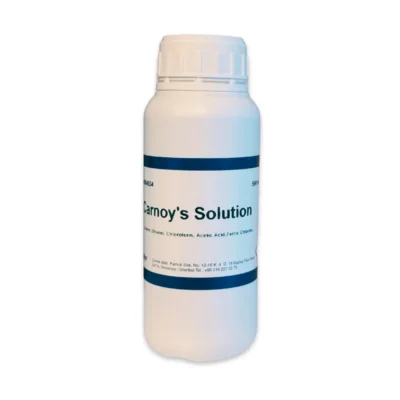
| Packaging | HDPE Bottle |
| Application Method | Topical Application via Saturated Sterile Cotton/Gauze |